Essential Amenities That Define Luxury Rentals
Why the Luxury Rental Market Has Reached a New Level of Intensity The luxury rental market has never been more competitive, and the gap between a property that earns the label and…

Why the Luxury Rental Market Has Reached a New Level of Intensity
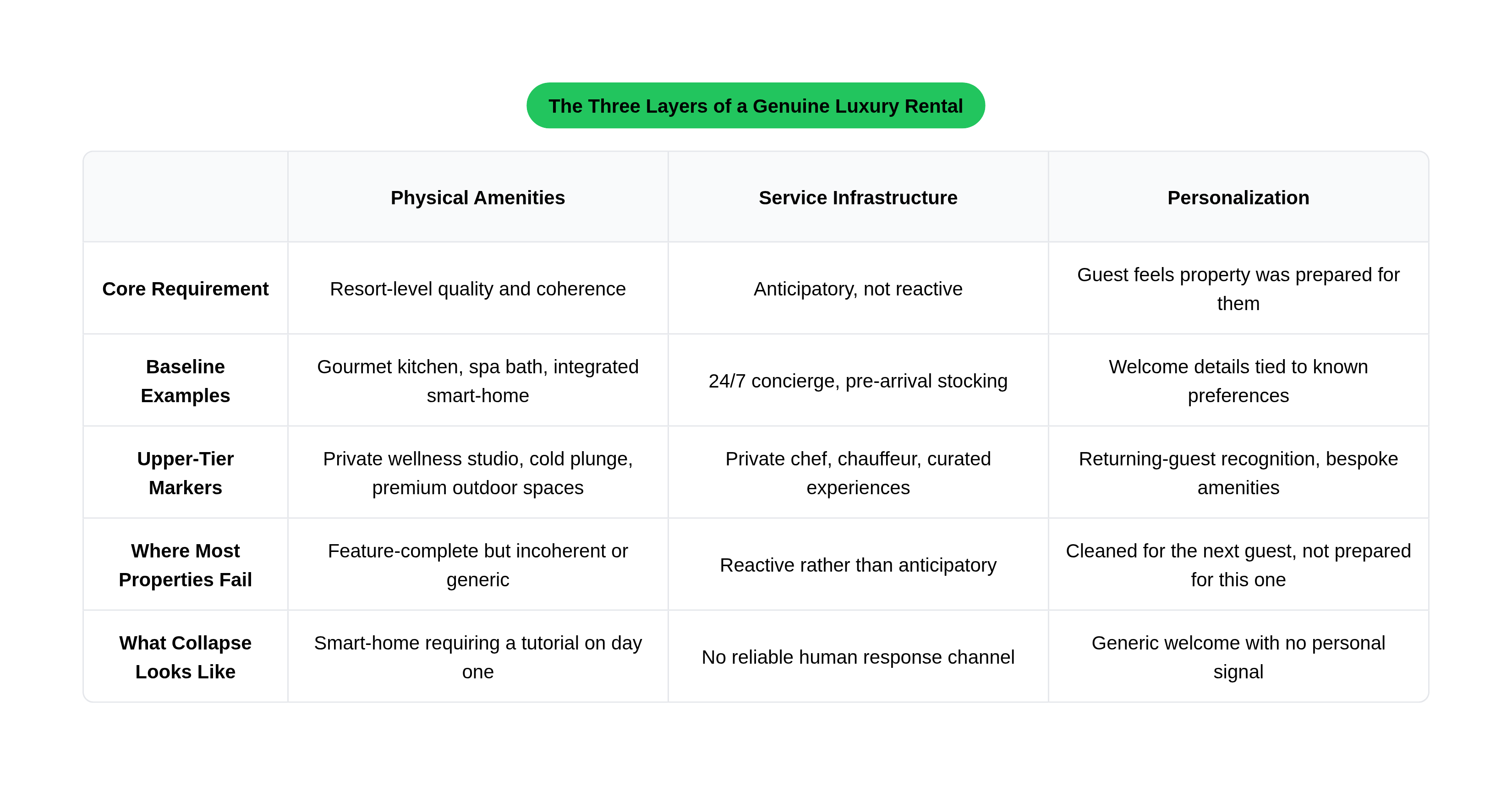
The luxury rental market has never been more competitive, and the gap between a property that earns the label and one that merely claims it has never mattered more financially. What separates a genuinely luxury rental from an expensive one is not a longer amenity list. It is the coherence of three interlocking layers: physical amenities that meet an uncompromisingly high baseline, a service infrastructure that anticipates rather than reacts, and details that make a guest feel the property was prepared specifically for them. Get all three right, and you replicate the five-star hotel experience in a private home. Miss any one, and the whole impression collapses.
Short-term stays priced at $1,000 per night or more jumped 73% between 2019 and 2023. Airbnb reported a 30% year-over-year increase in demand for luxury properties. On the Rentals United platform, 2025 data showed booking volume up 119% and revenue value up 169% year-over-year. This is not a trend finding its footing. This is a structural reconfiguration of where serious travel money moves.
Supply followed, inevitably, and that created the real problem. More properties now compete at the premium tier than at any prior point, which has put pressure on what the word "luxury" is actually permitted to mean. Alex Kuby of DyeLot Interiors captured it well when he told Fortune: "Amenities for the sake of having amenities no longer resonate with savvy residents." A market saturated with properties calling themselves luxury has made discerning travelers considerably better at detecting the difference between the real thing and an expensive facsimile. Guests arrive at a $1,500-per-night property having already stayed in five-star hotels. A smart TV and a spa towel do not constitute a luxury experience, and they know it.
Why Luxury Is Defined by How Amenities Work Together, Not How Many There Are
Here is what actually happened over the last decade: the market produced an entire generation of properties that compete on feature lists without improving the experience of staying in them. Gyms, coworking spaces, smart-home technology, high-end appliances. These were genuine differentiators once. At the premium tier in 2025, they are baseline assumptions, the cost of entry rather than the reason to book.
The threshold question has shifted accordingly. It is no longer "does this property have X?" It is "does X work seamlessly with everything else?" A gourmet kitchen that lacks quality cookware. A rooftop pool with uncomfortable furniture. A smart-home system that requires three apps and a tutorial on day one. Each of these undermines the whole, regardless of how impressive the individual specification looks in a listing.
The standard a luxury rental is now measured against is not "nice apartment." It is resort-level coherence in a private home. Three layers define whether a rental achieves that standard: what is physically there, how it is delivered, and whether it feels considered rather than merely installed. Everything that follows examines one of those layers, and the friction points between them.
The Foundational Amenities Guests Treat as Non-Negotiable Before Anything Else
The 2024 NMHC/Grace Hill Renter Preferences Survey, which gathered responses from over 172,000 participants across 77 markets, found that in-unit washer/dryer and air conditioning were each cited as essential by 93% of respondents. That figure precedes nearly every premium feature on the survey. Guests do not experience luxury if their practical needs are unmet, regardless of how impressive the rest of the property is. Operators underestimate this with surprising regularity.
Greystar's 2024 Design Survey of 90,000 renters reinforced the pattern. Walk-in closets were cited as important by 88% of respondents; 37% said they would not rent a property that lacked one. Large windows, natural light, fresh air ventilation, covered parking, high-efficiency appliances. These are not glamorous amenities. They are about daily comfort, personal space, and the functional dignity of a home.
For vacation rentals specifically, the kitchen carries outsized symbolic weight. Guests are not eating in a hotel restaurant; the kitchen is both a practical necessity and an aspirational centerpiece. A gourmet setup with premium appliances, quality cookware, and generous prep space signals a property's tier in a way that travels directly into the experience of using it. The bathroom works the same way. A spa-caliber bath with a soaking tub, rainfall shower, and high-end toiletries tells you, within sixty seconds of arrival, exactly what kind of property you are in.
Design and finish quality carry these foundational elements into genuine luxury territory. A property can have every item checked on a feature inventory and still feel generic. Conversely, a home with exceptional light, honest materials, and thoughtful proportions signals quality before a guest opens a single cabinet. That gap between feature-complete and actually good is where most properties fail, and where the best ones quietly distinguish themselves.
How Connectivity and Smart-Home Integration Became Part of the Luxury Baseline
The 2024 NMHC survey found that 90% of respondents were either interested in or would not rent without high-speed internet. More than any single physical amenity. Connectivity is not supplemental; it is infrastructure, as foundational as plumbing, and guests treat it that way the moment it fails.
Smart locks, video doorbells, and smart thermostats were among the features renters said they would pay a monthly premium to access. The National Apartment Association's research has shown that smart technology can increase rent premiums and accelerate leasing velocity. But the revenue case follows from the experience case, not the reverse. A property that deploys smart features to extract premium pricing without meaningfully improving the stay will not sustain that premium past the first wave of reviews.
The standard in a true 2025 luxury rental is not a collection of individual smart gadgets. It is an integrated automation backbone, the kind built on platforms like Crestron or Savant, that unifies lighting, temperature, motorized shades, audio, and security into a single coherent interface. What separates that from a budget smart-home setup is not the sophistication of any individual component. It is the seamlessness of the system: everything operating on the same platform, setup complete on arrival, no troubleshooting required on day one. The technology, at its best, disappears into the architecture entirely.
One figure from Rently is worth sitting with: 58% of renters surveyed said they would trade pool or gym amenities for better smart-home features. Frictionless access to the things guests already do, streaming, climate control, secure entry, is more valuable to most people than spectacular features that require effort to use.
Outdoor Spaces and Experiential Amenities That Drive Both Bookings and Rate
Pools drive an average 18.5% boost in average daily rate, 5% higher occupancy, and a 24% jump in revenue per available room for vacation rentals. Hot tubs represent the single highest-impact outdoor amenity by rate premium: properties with quality hot tubs typically achieve 25 to 35% higher nightly rates than comparable properties without them. A four-bedroom home with a pool and beach access can command 30 to 50% more than a similarly sized inland property without those features.
Experience-driven outdoor amenities outperform functional ones because they shape how a guest imagines the stay before booking. A hot tub, a fire pit, a waterfront view: these create a mental picture of the vacation moment, the highlight reel guests play in their heads while they decide. An in-unit washer/dryer, however essential, does not. Guests book toward an imagined experience, and the right outdoor amenities populate that imagination favorably.
Over 90% of new luxury buildings include fitness centers, rooftop decks, and coworking spaces as standard. Buildings with resort-style pools command meaningfully higher rents than those without. The pattern holds across property types: outdoor spaces that feel intentional rather than incidental translate directly to rate.
The design implication matters here more than most operators acknowledge. An outdoor space conceived as an extension of the interior, with furniture quality, lighting, privacy, and landscaping that match the interior's standard, performs differently from a yard with a table and four chairs. The distinction is not primarily about cost. It is about whether the outdoor area was designed to be inhabited or merely listed as a feature.
Wellness as an Amenity Category That Has Outgrown the Gym
The wellness real estate sector reached $548 billion globally in 2024, up from $225 billion in 2019. That growth rate outpaces broader construction activity by a significant margin, and the trajectory has not flattened. Wellness is not a niche add-on at the luxury tier. It is a primary category of competition.
What wellness means in a luxury context has expanded considerably from the treadmill-and-free-weights model. Michael Fazio, chief creative officer at LIVunLtd, has described the category as now encompassing air quality, water quality, circadian-friendly lighting, acoustic comfort, and biophilic design, each treated as components of an integrated system rather than individual checkboxes. The gym still exists. It is no longer the defining feature.
Leading luxury properties in 2025 offer private Pilates studios and yoga spaces alongside conventional fitness areas. Recovery lounges with infrared therapy, cold plunge, cryotherapy, and compression therapy have become markers of the upper tier. Salt rooms, guided breathwork spaces, and in some urban buildings, med-spa amenities including IV hydration and functional medicine consultations have emerged at the frontier. Atria at One High Line in New York operates this way. A South Florida development opened a 13,000-square-foot wellness center including a bathhouse, hyperbaric chamber, IV therapy, and a Vitality Lounge offering physical therapy and functional medicine services. These properties are not outliers; they are the leading indicators of where the category is heading.
The distinction that separates sophisticated properties from those that merely install equipment is programming. Curating a wellness experience across fitness types, high-intensity, restorative, and recovery-focused, and treating the full arc of that experience as a guest journey is what elevates a wellness offering from a feature into a philosophy.
For vacation rentals, the translation is scaled but the principle holds. A private rental cannot replicate a 13,000-square-foot wellness center. It can, however, signal wellness intentionality through a quality yoga mat and props, a cold plunge or hot tub, blackout shades, filtered water, and a thoughtful relationship between the space and the guest's physical experience of being in it. Guests read a property's wellness orientation in aggregate, across many small signals, and the absence of several of those signals reads as indifference.
Concierge Service and Personalized Touches That Convert a Good Property Into a Memorable Stay
John Farina, president and CEO of U.S. Development, put it plainly when he told Fortune: "Discerning buyers look for world-class amenities that you would expect when staying in a five-star luxury resort. They expect the service to also go hand-in-hand." A five-star hotel's physical rooms are not always larger or more opulent than a well-appointed luxury rental. What the hotel delivers that the rental historically has not is responsiveness, anticipation, and consistency of service. That gap is the primary reason serious travelers have historically defaulted to hotels for important trips.
The vacation rental market's most sophisticated operators have spent the last several years closing that gap. A 24/7 concierge line for real-time requests, the model companies like Fieldtrip have built, is now a feature of the leading tier. Pre-arrival grocery stocking and pantry setup have become expected rather than exceptional. On-demand private chefs, massage therapists, yoga instructors, and photographers reflect the experiential direction of the category; Airbnb's Summer 2025 platform release expanded services of this kind to 260 cities. The full complement at the high end includes housekeeping with turndown service and daily linen refresh, private chauffeur or house car, boat charters, beach setup, and curated local experience planning.
High-value, low-cost details matter enormously here. Late checkout flexibility. Dinner reservation assistance. A welcome amenity that reflects something specific the property team actually knows about this particular guest. Consider what one operator shared: a returning guest mentioned offhandedly in a previous stay that she always travels with her own French press because she can never find one that works. She arrived at her next booking to find a quality French press on the counter with a note attached. She left a five-star review and rebooked within the week. These signals distinguish a property prepared for this guest from one merely cleaned for the next one.
Robes, slippers, high-end toiletries, quality linens. Guests read these as evidence that the preparation was intentional, that someone thought about the experience of arriving and walking through the door, not just the experience of browsing a listing.
How the Combination of These Layers Produces the Five-Star Experience in a Private Home
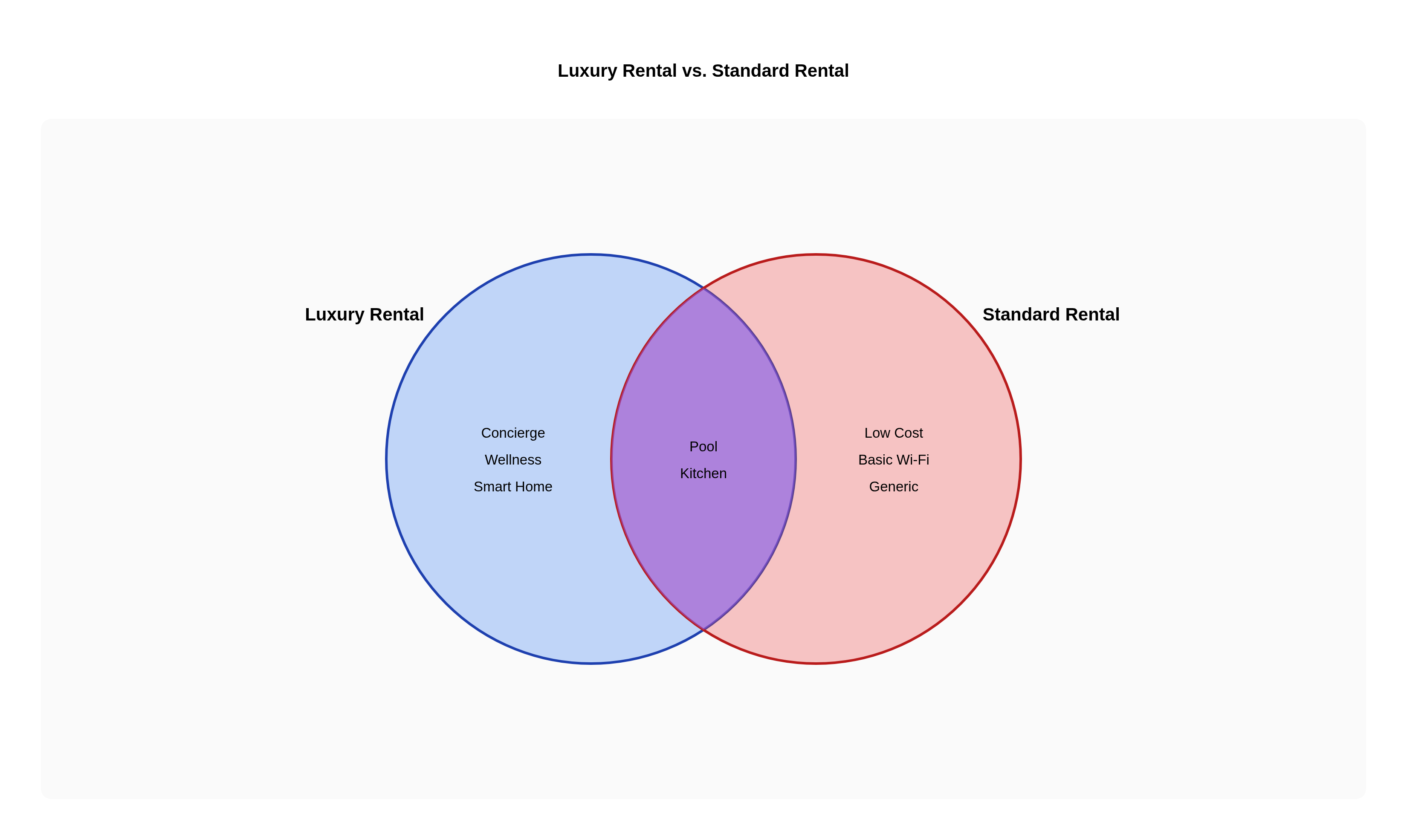
No single category is sufficient on its own. A property with a hyperbaric chamber and unreliable Wi-Fi is not a luxury rental. A gourmet kitchen without a reliable concierge response is an expensive inconvenience. A hot tub in an otherwise generic space is a feature, not an experience. The premium accrues to properties that execute across all layers simultaneously, and top-decile short-term rental properties reflect this precisely: they generate 40 to 60% higher revenue per square foot than market averages and sustain occupancy meaningfully above local norms.
The five-star hotel achieves its standard through systems: standardized training, centralized operations, quality control at every touchpoint. A true luxury rental replicates this through professional management and intentional curation. The operational model differs; the guest experience it produces does not have to.
For travelers evaluating a property, the question is not which specific amenities are listed. It is whether the amenities, service, and design philosophy work together. Are the foundational physical amenities genuinely high quality, or merely present? Do the outdoor and wellness spaces create a distinct vacation moment, or just a backdrop? Does the smart infrastructure remove friction or introduce it? Is there a responsive, anticipatory human element the guest can actually rely on? Does the property feel prepared for this guest specifically, or just cleaned for whoever comes next?
When the answer is yes across those dimensions, what you have is not a nice rental with impressive features. You have a private home that delivers something hotels have spent decades learning to produce: the particular comfort of a space that was thinking about you before you arrived.