Short Term Apartment Rentals in NYC for Families
Legal furnished apartments in NYC now require 30-day minimums and registration numbers.
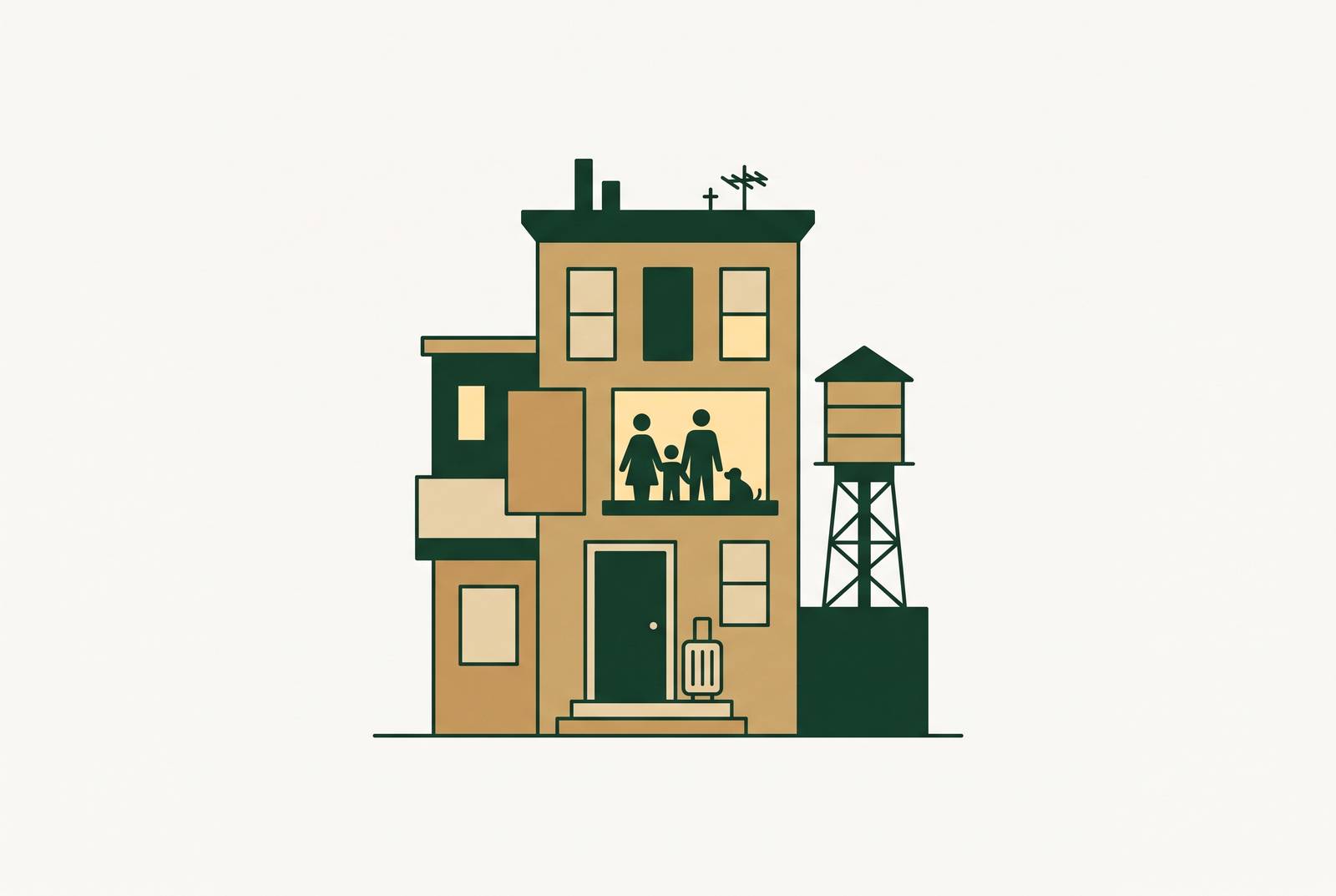
New York City did not just tighten the rules on short-term rentals in 2022. Local Law 18 effectively killed the whole-apartment, nightly-booking model for anyone visiting the city, families included. But the law didn't erase the option to stay in an apartment instead of a hotel. It just shifted the minimum stay to 30 days, and families who know that threshold can still find something that works.
Why listings that look like the old model are almost certainly illegal
If a listing offers an entire apartment for a stay under 30 days and shows no registration number, treat it as a red flag. The Mayor's Office of Special Enforcement (OSE) requires hosts to register, and a valid registration number is what separates a compliant listing from one that isn't. No number means no registration, and no registration means the booking sits outside the law, whatever the platform's search results suggest.
A few workarounds still float around. Invite-only groups, sometimes called the "Friendbnb" model, pass around private listings outside the major platforms. These carry real legal and safety risk, and that risk lands on the guest, not just the host arranging the booking. Booking.com still surfaces apartment listings in New York searches, somewhere around 430 of them at last count. Each one needs individual scrutiny before anyone books it, because appearing in a search result is not the same as being compliant with LL18.
OSE has flagged that illegal rentals in buildings never meant for transient guests can lack proper fire alarms, sprinklers, and clear exits. This isn't only a legal risk. It's a physical one, and it's the reason enforcement exists in the first place.
There's also a version of the old model that's technically still legal: a host stays present in the unit during the guest's visit. But the guest cap sits at two people, which rules out most families before the conversation even starts. And even fully compliant listings carry a cancellation risk that families should plan around: if a platform or OSE pulls a non-compliant listing after a family has already booked flights, that family is left rebuilding a trip on short notice.
None of this means every illegal pathway needs cataloging. Simply put, start with listings that are compliant from the beginning, instead of hoping something slips through unnoticed.
The 30-day minimum as the functional reset: how it redefines "short-term" for NYC families
New York City and State now enforce a 30-day minimum stay for furnished apartments. That's a market outcome shaped by regulatory pressure rather than a platform rule Airbnb or Booking.com invented. It's the legal line that separates a short-term rental from a residential tenancy, and it's the number families need to plan around.
One category of buildings sits outside this rule. Class B multiple dwellings, buildings legally approved for transient occupancy, are exempt from LL18's registration requirements. This is the loophole licensed extended-stay operators use, and it's the reason some apartment-format stays under 30 days are still fully legal.
Put those two facts together and the practical meaning is this: "short-term apartment rental" in New York City is now mostly a furnished monthly rental product, not a nightly one. Three legitimate paths follow from that:
- 30-day-minimum furnished apartment providers like Blueground and June Homes, offering a fully residential setup with real kitchens and multi-bedroom layouts.
- Licensed extended-stay operators working in Class B buildings, such as Sonder and AKA, with a legal basis for transient stays.
- Extended-stay hotel chains with kitchenettes, like Residence Inn and Homewood Suites, which aren't apartments but offer a legal option for anyone staying under 30 days.
One peer-to-peer platform stands out for handling compliance differently. Leasebreak, a subletting marketplace, publicly displays whether a landlord has confirmed permission to sublet, making compliance status visible to prospective renters. Most platforms leave compliance as an assumption. Leasebreak makes it visible.
The market is already shifting this direction on its own. Bookings lasting four to eight weeks rose 23% in 2025, a sign that families and other travelers are adjusting their expectations to match what the law actually allows.
What families actually pay: the pricing math across legal options
Start with the baseline. As of August 2025, unfurnished market rent in New York averaged $3,260 a month for a studio, $4,031 for a one-bedroom, roughly $5,488 for a two-bedroom, and $6,995 or more for a three-bedroom. That's a market running 146% above the national average of $1,638 a month.
Rents haven't slowed down since. RentHop data from September 2026 puts one-bedrooms at $4,800 a month, up $388, or 8.80%, year over year. Two-bedrooms are $6,400, up $644, or 11.19%. Three-bedrooms run $7,500, up $567, or 8.18%. Any furnished, flexible-lease premium gets added on top of a market that's already climbing.
That premium is real and easy to see in a single example. Blueground's 41 Park Ave. lists a furnished one-bedroom at $5,470 a month on a 12-month lease, but the same unit runs $10,130 for a single month. That's close to double the rate, and it's the price families pay for maximum flexibility.
Run the hotel math alongside it. Average nightly rates in New York hit $283 in July 2025, up 7% over two years, according to CoStar. September rates climbed to $417 a night, which makes peak-season family trips especially expensive if a hotel is the only option considered. Hotel prices rose roughly 6% in 2024, a period that coincided with the removal of thousands of short-term listings from the market under LL18.
Taxes add another layer families tend to miss. Hotel stays carry a combined occupancy tax of 14.75%, plus a flat $3.50 nightly fee. Furnished apartment rentals over 30 days typically skip these charges entirely, and over a multi-week stay, that difference adds up fast.
The per-person math depends heavily on group size. A Brooklyn vacation rental can save a family of four around $360 over four nights compared to booking two Midtown hotel rooms, though that gap narrows once fees get counted on the Midtown side. The clearest win shows up when multiple families share a single three-bedroom apartment rather than splitting into separate hotel rooms.
One more caution worth building into any comparison: most apartment listings quote a monthly rate before Wi-Fi, utilities, taxes, or broker fees. Add a buffer before assuming the sticker price is the final price.
The platforms and providers that actually work for families under LL18
Blueground, founded in 2013, runs furnished apartments on flexible leases starting at one month. Its New York inventory tops 600 apartments across Chelsea, Tribeca, Midtown, the Upper East Side, and Park Slope, ranging from studios to two-bedrooms, a range that fits small families reasonably well. The 41 Park Ave. listing runs $5,470 a month on a 12-month lease or $10,130 for a single month, with rates dropping the longer the stay runs. Leases can convert to month-to-month.
June Homes, founded in 2017, focuses on flexible, compliant rentals for mid- to long-term stays. As of September 14, 2026, its New York inventory includes 64 one-bedroom apartments starting at $4,150 a month and 26 two-bedrooms starting at $5,600. Units come furnished or unfurnished, as a whole apartment or a single room, with roommate matching available for anyone open to it. Support runs 24/7, and June works directly with both single-family and multi-family building owners.
Sonder operates inside Class B buildings, the ones legally cleared for transient occupancy, which puts it outside LL18's registration rules. Rates start around $150 a night, with hotel-style support layered onto apartment-format units. Named New York properties include Sonder Court Square, Sonder At One Platt, and Sonder Battery Park. For families needing a stay shorter than 30 days but still want a real apartment layout, this is one of the few paths that's fully compliant.
AKA follows a similar model: furnished apartments in Class B buildings with hotel-like service, and rates in that same starting-around-$150-a-night range. It's a fit for families who need a legal stay under 30 days without giving up the space and layout of an apartment.
Apartments.com functions as an aggregator rather than an operator, listing roughly 2,940 flexible short-term apartments across New York, filterable by term length, one to two months, three to four months, five to six months. Park Slope alone shows around 122 listings. It's a useful starting point for comparing neighborhoods, but every listing still needs individual verification for LL18 compliance before booking.
Leasebreak connects tenants and brokers for peer-to-peer sublets, and its standout feature is transparency: landlord permission status is displayed and filterable, so a family can screen out anything unconfirmed before reaching out. It functions less like a booking site and more like a due-diligence tool, which matters for anyone protecting a longer stay from getting pulled midway through.
Extended-stay hotel chains like Residence Inn and Homewood Suites round out the list. They come with kitchenettes and weekly rates, and while they're not apartments in any real sense, they're a fully legal fallback when a family's trip runs shorter than the 30-day minimum most furnished rentals require.
Booking.com still lists around 430 apartments in New York searches, with prices starting near $70 a night. As noted above, none of these come pre-vetted for LL18 compliance. The platform surfaces them; the family has to check them.
Which neighborhoods make the most sense for families staying 30 days or more
The Upper West Side makes an easy case for itself, offering Riverside Park, Central Park access, the American Museum of Natural History, the Children's Museum of Manhattan, and playgrounds scattered throughout. Building stock mixes pre-war layouts with modern high-rises, and the neighborhood's building stock mixes pre-war layouts with modern high-rises. Transit access is strong, and the neighborhood's whole infrastructure leans toward families with kids already.
Park Slope, Brooklyn offers a brownstone streetscape, pedestrian-friendly blocks, and direct frontage on Prospect Park. Housing runs toward rowhouses and mid-rise buildings, and it's relatively more affordable than Manhattan on a per-square-foot basis. Apartments.com lists around 122 short-term apartments here.
Williamsburg, Brooklyn tends to attract longer, more residential stays rather than short sightseeing trips. Inventory runs from loft-style apartments to luxury high-rises, with a waterfront setting and an active arts scene that makes it genuinely livable for a month-long stay, not just visitable.
Long Island City, Queens brings newer apartment stock with Manhattan skyline views, and tends to come in at more affordable price points compared to comparable newer buildings in Manhattan. Subway access into Midtown runs quick and direct, which suits families who want Manhattan proximity without Manhattan pricing.
Midtown Manhattan carries the highest concentration of furnished corporate housing and licensed extended-stay operators, and it's the easiest base for families prioritizing landmarks and transit above everything else. The price point runs higher, and the residential feel thins out compared to the outer boroughs. It's more practical than livable for an extended family stay.
For families watching cost above all, Washington Heights and Central Harlem are Manhattan neighborhoods worth considering for rental stock. Kingsbridge, in the Bronx, rarely comes up in these conversations, but it's worth surfacing: rents run low citywide, streets are family-friendly, parks are nearby, and the 1 train gets residents into Manhattan without much hassle.
What may change: the reform bill families should know about
Legislation to loosen LL18 has been introduced, and none of it has passed yet. Int 1107-2024, introduced November 13, 2024, would have let owner-occupants of one- and two-family homes host guests without being physically present, raised the guest cap, and relaxed the rule requiring doors to stay unlocked during a stay. It never reached a vote and was filed at the end of the legislative session on December 31, 2025, with seven sponsors attached. It died there.
The provision families should watch most closely sat in a related bill, Int 0948-2024, which proposed raising the guest limit from two to four. That single change would have reopened whole-apartment short-term stays to a standard family unit, something the current two-guest cap rules out almost by design.
A successor bill, Int 879-2026, was introduced by Council Member Mercedes Narcisse on April 30, 2026, and referred to the Committee on Housing and Buildings. As of the most recent information available, it remains in committee, with no vote scheduled.
Families planning a trip now should plan around LL18 exactly as it's written today, not around what a future bill might allow. The 30-day minimum, the registration requirement, and the two-guest cap on host-present listings are the rules in effect, and they're the ones that determine whether a booking is legal or a liability waiting to surface mid-trip.