Multi-Platform Listing Strategies for Luxury Vacation Rentals: Which Channel Combinations Maximize Returns
Finding the right channel mix can boost luxury rental revenue by 35 to 50 percent.
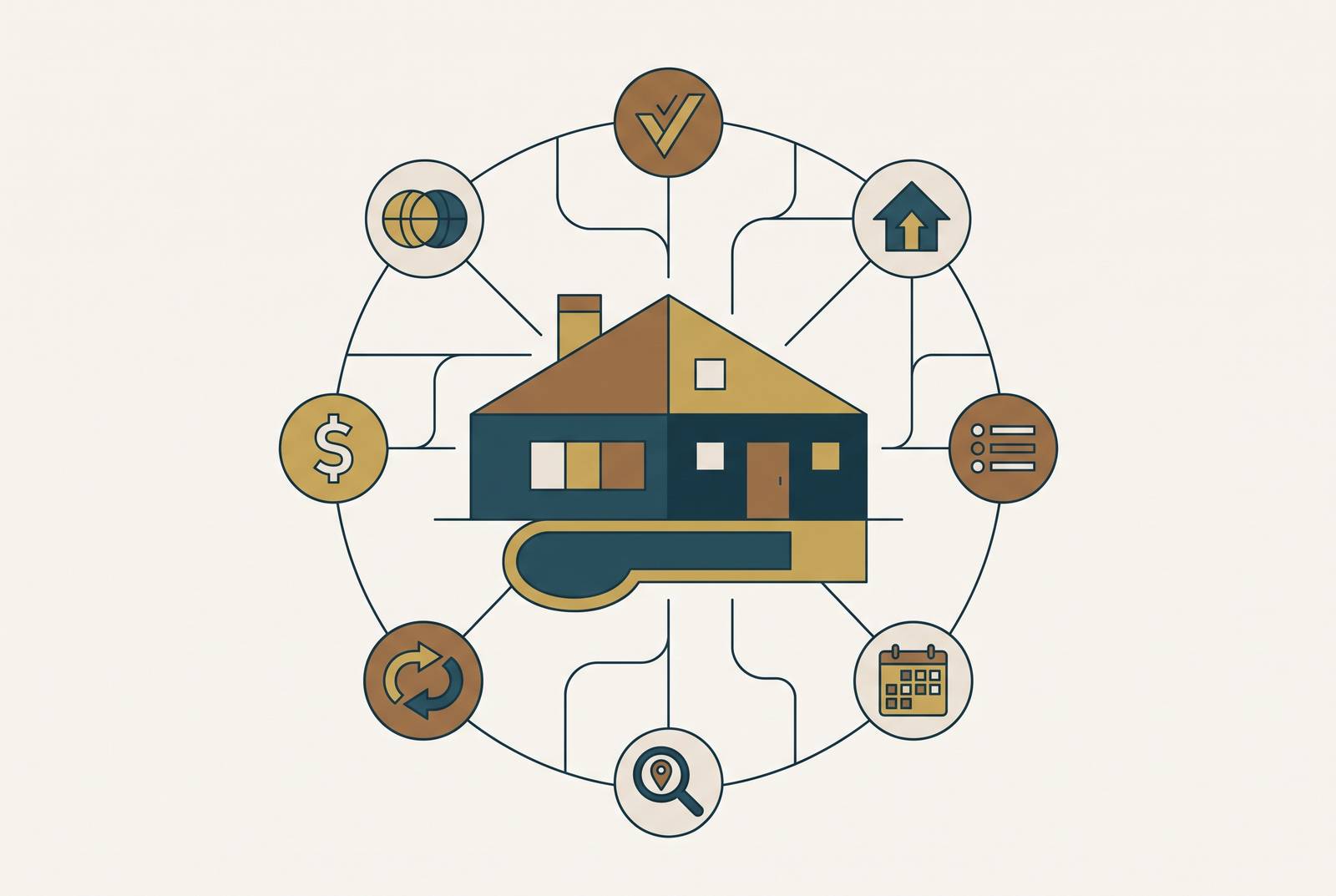
Luxury vacation rentals live or die on distribution, not just price. You can price a $15,000-a-week villa exactly right and still leave money on the table if you're only reaching one slice of the guests who'd pay it. This piece covers which channels actually earn a place in a luxury rental's booking stack, and how to combine them so they add up instead of tripping over each other.
The segment doesn't behave like the rest of the short-term rental market. It was worth $26.5 billion in 2024, growing at 9.3% a year through 2034, and every booking here carries real money on the line. The broader market, meanwhile, is straining: total nights booked rose 5.5% year over year through the end of 2025, but occupancy fell anyway, down 1.5% to 48.4%, because supply grew faster than demand. Available listings climbed 4.2% to 1.68 million.
Luxury doesn't feel that squeeze the same way. Guests at this level are fewer in number, further along in their decision by the time they start looking, and far less sensitive to price. They're also harder to reach and pickier about who they trust, which is part of why villas and estates, especially in coastal markets, led property-type performance in 2024. A $150-a-night cabin and a $15,000-a-week coastal villa might show up on the same OTA page, but the guest expectations, damage exposure, and fee tolerance behind them have almost nothing in common. Channel decisions that barely register for a mid-market rental can quietly cost a luxury owner real money. Sometimes worse: real reputation.
Why single-channel listings leave revenue unclaimed even when the property is priced correctly
Pricing sets the floor and ceiling of what a single listing can earn. Distribution sets the ceiling on what pricing can even reach. A perfectly priced listing on one platform is still only competing for that platform's pool of guests, and no amount of rate tuning changes that.
RedAwning runs distribution for a network of over 20,000 properties across more than 50 booking channels. Their numbers say listings spread across 10 or more channels earn 35% to 50% more revenue than listings sitting on just one channel. That gap alone should make an owner ask whether their setup is catching demand or just sitting there hoping for it.
Professional operators tend to run 6 to 10 channels at once, not because more is always better, but because each one pulls in a different guest. Airbnb's crowd isn't VRBO's crowd. Booking.com's crossover hotel shopper isn't either.
Then there's the fragility problem, and single-channel owners never see it coming until it's already happened. FlipKey shut down in 2024 after TripAdvisor pulled the plug on its booking business, canceling reservations and ending contracts with homeowners overnight. Sonder collapsed in November 2025 once Marriott ended their agreement. Neither was a slow fade; both happened fast, and owners who'd leaned on one platform as their main channel got left scrambling for a plan B that didn't exist yet.
So this isn't about listing everywhere and crossing your fingers. A deliberate multi-channel presence raises the ceiling on demand and removes the single point of failure that comes from betting on one platform sticking around.
What Airbnb and VRBO each actually deliver for a high-end property, and where each falls short
Airbnb is the biggest room in the house, by a wide margin. It accounts for an estimated 44% of global vacation rental revenue, with 7.7 million active listings worldwide. For luxury owners specifically, Airbnb Luxe curates over 4,000 properties into a distinct, vetted, design-forward tier within the larger platform.
The fee picture changed recently, and it matters more than most owners have priced in yet. As of late 2025, Airbnb moved to a single 15.5% service fee taken from host payouts for listings connected through a property management system. On a high-ticket booking, that's a real drag on net revenue.
The tradeoff with Airbnb is dilution. Luxury seekers browse the same platform as backpackers splitting a room, and even with Luxe carving out a curated tier, the acceptance process is selective and Airbnb still owns the guest relationship start to finish.
VRBO plays a different role. It holds around 29% market share in North America and roughly 21% overall, the clear number two in the US. Structurally, it fits luxury whole-home inventory better: VRBO lists only full properties, no shared spaces, no private rooms, across more than 2 million listings. Its guest base skews older, more affluent, and more inclined toward longer stays, which lines up with what a premium property actually needs.
On fees, VRBO runs about 8% total: 5% commission plus 3% payment processing, against Airbnb's 15.5% for PMS-connected hosts. On a $20,000 booking, that gap is real money. But a lower fee doesn't automatically mean more cash in the owner's pocket at year end, since Airbnb usually delivers more volume. The real math depends on how a specific property performs on each platform, not the fee schedule on paper. VRBO has also added roughly a million urban listings recently, moving past its vacation-market roots, which may be diluting the very specialization that made it valuable to begin with.
For most luxury whole-home properties in premium markets, both platforms earn a spot in the stack. Neither carries the load alone, and the fee gap between them should shape how rates get set on each.
When Booking.com earns a place in the luxury stack and when it doesn't
Booking.com holds around 8% of the global vacation rental market, but it's growing fast in cities specifically. Alternative accommodations went from 25% of its total bookings before the pandemic to 36% in 2024. In Europe, Booking.com leads online booking share of stays at 48% against Airbnb's 40%, driven largely by hotel demand that spills over into short-term rentals.
The guest here is a different animal. They usually start out searching for a hotel and stumble onto a short-term rental along the way, rather than setting out to book a vacation home specifically. For a Manhattan penthouse or a South Beach condo, that crossover traveler is genuinely worth having: someone who might otherwise book a five-star hotel room is exactly the high-spending guest a luxury rental wants.
For a rural or resort villa, where the setting itself is the whole product, that same hotel-minded shopper isn't primed to find it or want it. The discovery path doesn't match how that guest thinks. Add Booking.com when the property is urban or semi-urban and competing against hotels. Push it down the list, or skip it entirely, for destination properties where the booking journey is built around the rental itself.
What luxury-specific platforms — Plum Guide, Onefinestay, and Marriott Homes & Villas — actually offer owners
These platforms share one premise: trade volume for signal. Getting listed here tells a guest, and tells the algorithms guests trust, that the property has actually been checked out in person, not just uploaded with a few photos.
Plum Guide runs a 150-point checklist covering design, amenities, neighborhood, and everyday functionality, and turns away around 95% of applicants. A 2025 price study comparing 12 properties found Plum Guide priced higher than direct booking on 9 of them, with the premium running 3% to 14% and a median around 8%. Guests here are paying for the curation itself. There's a knock-on effect too: a Plum Guide listing can strengthen rate integrity across an owner's other channels, since the credential changes how the property gets seen everywhere else.
Onefinestay, owned by Accor, runs about 5,000 properties concentrated in ultra-luxury, turning down 9 out of 10 applications. This is full-service, not a self-serve listing you set up in an afternoon. Accor takes 50% of rental revenue, and for that cut handles professional photography, styling, and gives owners access to Accor's loyalty program and travel advisor network. The reach argument holds up: Accor's loyalty members and travel advisors surface high-net-worth guests who never open an OTA app in the first place, and that can be worth the margin trade for an owner renting out a primary residence occasionally. Still, half the revenue is a steep price, and the owner hands over operational control completely. This fits someone optimizing for simplicity and brand association, not someone chasing every last dollar of yield.
Hotel-loyalty-linked platforms reach guests who arrive expecting hotel-grade standards, a different pool from the typical vacation-rental browser. They work best for properties that can actually deliver hotel-level presentation and service. A property that can't meet that bar collects reviews that follow it to every other platform the owner is on.
Across this luxury tier, fees generally run 15% to 50% of rental revenue, depending on whether full-service management comes bundled in. That's not comparable to a straight OTA commission, and shouldn't get judged by the same yardstick. What these platforms don't do is replace Airbnb or VRBO's volume. They reach a different guest, at a different level of trust, and they belong on top of the mass-market channels, not instead of them.
Why a direct booking channel is the only part of the stack that compounds over time
By 2025, direct booking sites already made up nearly 34% of all short-term rental reservations, according to AirDNA. That's not a fringe tactic. It's a real, sizable share of how this market books today.
Direct bookings tend to run longer in length of stay and carry a wider booking window than OTA bookings. Guests who book direct aren't just cheaper to acquire; they stay longer and plan further ahead, which makes each one worth more, not just cheaper to land.
This is where it starts to add up over time. An OTA booking pays for that one stay and nothing past it. A direct booking builds something: a repeat visit, a referral to a friend, zero commission on whatever that same guest books next. At luxury price points, cutting out the fee is real money. At typical OTA commission rates, the fees on a high-revenue luxury property add up to a significant sum each year, and luxury properties routinely sit at multiples of a mid-market baseline.
The core lever is straightforward: making fee savings visible and immediate at the moment of booking gives guests a concrete reason to choose the direct channel over an OTA.
None of this happens without groundwork, though. A property needs a website that actually converts: real photography, visible trust signals, a booking engine that works, not just a page sitting there collecting dust. It needs a way to bring past guests back, through email rather than social media, since email is the one channel an owner actually controls. And it needs rate parity discipline, so OTAs never undercut the direct price and quietly erase the whole reason to book direct. Direct booking doesn't replace OTAs, especially in the early years. It's the layer that makes every dollar spent acquiring guests through OTAs work harder the second and third time around.
How to build the channel stack so channels reinforce each other rather than cannibalize
Every channel in the stack needs a job: bringing in new demand, signaling trust, or bringing a guest back for round two. A channel not doing one of those three is just another listing hoping for scraps.
A working stack for a luxury whole-home property in a premium US market might look something like this:
Volume layer: Airbnb, and Airbnb Luxe where eligible, for sheer reach, paired with VRBO for the affluent family and group traveler who leans toward whole-home stays. Run both at once; their guest pools overlap less than the market share numbers suggest.
Trust-signal layer: Plum Guide or a hotel-loyalty-linked platform for the credential effect and the guests who self-select through platform choice, or Onefinestay if the owner wants full management handed off along with access to Accor's loyalty network.
Urban supplement: Booking.com, but only for city properties where hotel-crossover demand genuinely exists.
Retention layer: a direct booking website with email capture from every OTA stay, turning first-time guests into direct bookers next trip.
Curated marketplace layer: a vetted luxury marketplace reaching high-intent guests who want platform-level trust and curation without OTA noise.
Cannibalization is a real risk. But it comes from one specific mistake: running identical rates across every channel with no differentiation. It doesn't come from simply showing up on multiple platforms. The fix is rate logic that shifts slightly by channel based on each one's fee structure, plus booking-window rules that give direct bookers and top-tier channels first pick of peak dates.
None of this runs by hand, either. A channel manager or property management system is what makes 6 to 10 channels operationally sane. Try to manage that many calendars yourself, in separate tabs, and double-bookings are just a matter of time.
The stack doesn't start at 10 channels, either. As Sally Henry of Key Data has pointed out, the goal is a deliberate mix, not a land grab. Start with 3 to 4 channels that actually fit the property and its market, then add layers as booking history and operational capacity grow. Research from Hostfully backs this up: operators posting stronger ADR and occupancy consistently ran more diversified channel mixes. Getting the stack right isn't housekeeping. It moves the numbers that matter.
The decisions that determine whether the stack holds its value over time
Rate parity has to be handled correctly, and most owners get this wrong. The direct booking price should mirror the OTA's net rate, meaning the OTA price minus its guest service fee, not the OTA's gross sticker price. Compare against the gross number and the direct site looks more expensive than it actually is, which kills the entire incentive to book direct in the first place.
Platform dependency needs constant watching. FlipKey's 2024 shutdown is the clearest recent warning: a channel can vanish overnight, canceling reservations and leaving owners with no real recourse if it was their main source of bookings.
Fee changes call for immediate repricing, not a wait-and-see shrug. Airbnb's move to a 15.5% host-only fee in late 2025 shifted the net revenue math for every PMS-connected host overnight. A stack still priced against the old fee structure is quietly underperforming right now, even if the calendar looks full.
Peak inventory allocation matters more at the luxury tier than almost anywhere else. A calendar only has so many high-value weeks: summer weekends in the Hamptons, ski weeks in Aspen. Those dates should route to whichever channels deliver the highest net revenue first. Get that sequencing wrong, and the stack can look busy on paper while quietly leaving its best weeks sitting unclaimed.